
 Terviseportaal
International congress on dry eye and lacrimal disorders held in Tallinn
The 15th International Congress of Dacryology and Dry Eye was held in Tallinn from 17 to 19 June, bringing together more than 300 ophthalmologists and researchers from 30 countries. The event focused on developments in the diagnosis and treatment of lacrimal disorders, ocular surface diseases and dry eye disease.
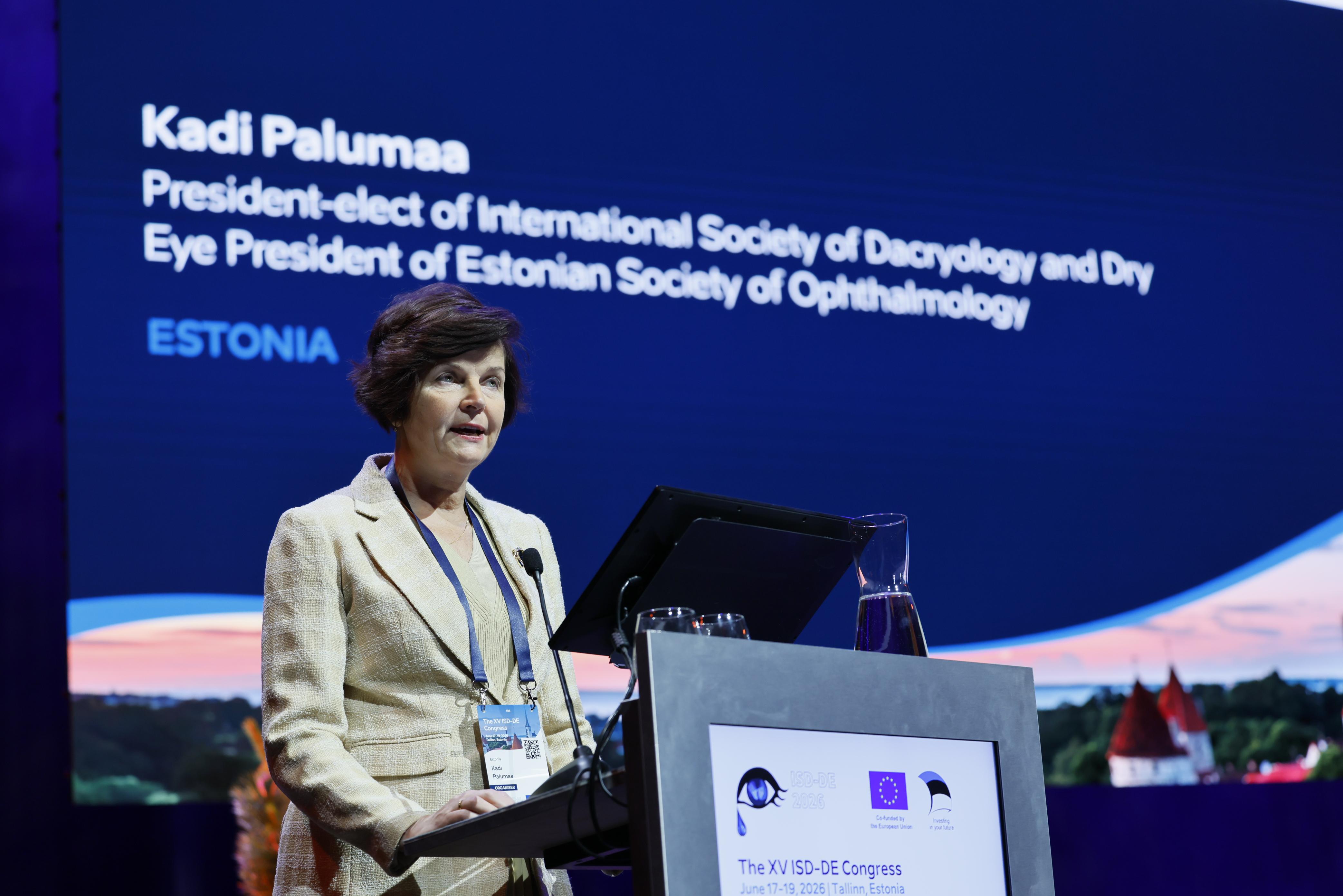
The congress was chaired by East Tallinn Central Hospital ophthalmologists Dr Kadi Palumaa and Dr Reili Rebane. According to Dr Palumaa, treatment for dry eye and lacrimal disorders is moving towards a more precise approach.
“Dry eye is no longer regarded as a single disease, but as a group of conditions with various causes and mechanisms. This means that treatment must also become increasingly personalised,” Dr Palumaa said.
She said the congress highlighted new diagnostic methods, the assessment of inflammatory processes on the ocular surface and modern surgical solutions for lacrimal disorders. Participants also discussed how research findings can be translated into everyday clinical practice.
The congress opened on 17 June with a live broadcast from the Eye Clinic of East Tallinn Central Hospital, allowing attendees at Alexela Concert Hall to watch five eye operations in real time. Alongside Estonian doctors, specialists from the United States, Switzerland, Turkey and Japan took part in the surgical session, which demonstrated techniques for treating lacrimal disorders.
According to Dr Palumaa, the main value of the live surgery session was educational, as participants were able to follow the procedures and discuss treatment options during the operations.
“When doctors gain new knowledge, learn modern treatment methods and build international contacts, the benefits reach patients either directly or indirectly,” she said.
Dry eye disease is estimated to affect at least 344 million people worldwide. Symptoms may include stinging, a burning sensation or fluctuating vision, and in more severe cases the condition can affect a person’s ability to work and their quality of life. The problem becomes more common with age and may be associated with other eye conditions and overall health.
In dry eye disease, the surface of the eye does not remain sufficiently moist, which can cause irritation, pain, sensitivity to light and fluctuating vision.
Dr Palumaa said the fact that the congress was held in Tallinn showed that Estonian ophthalmologists are visible in the international professional community. In her view, hosting such a congress creates opportunities for research cooperation, training and joint projects.
Scientific presentations took place over two days, with invited speakers from different continents as well as Estonian doctors and residents.
The congress was organised by ophthalmologists from East Tallinn Central Hospital in cooperation with Konverentsimeistrid, the International Society of Dacryology and Dry Eye and the Estonian Society of Ophthalmology. Following the Tallinn congress, Dr Palumaa was elected president of the International Society of Dacryology and Dry Eye for a two-year term.