
 Terviseportaal
ITK Conference Highlighted the Impact of an Ageing Population on Healthcare and Emerging Directions in Cancer Treatment
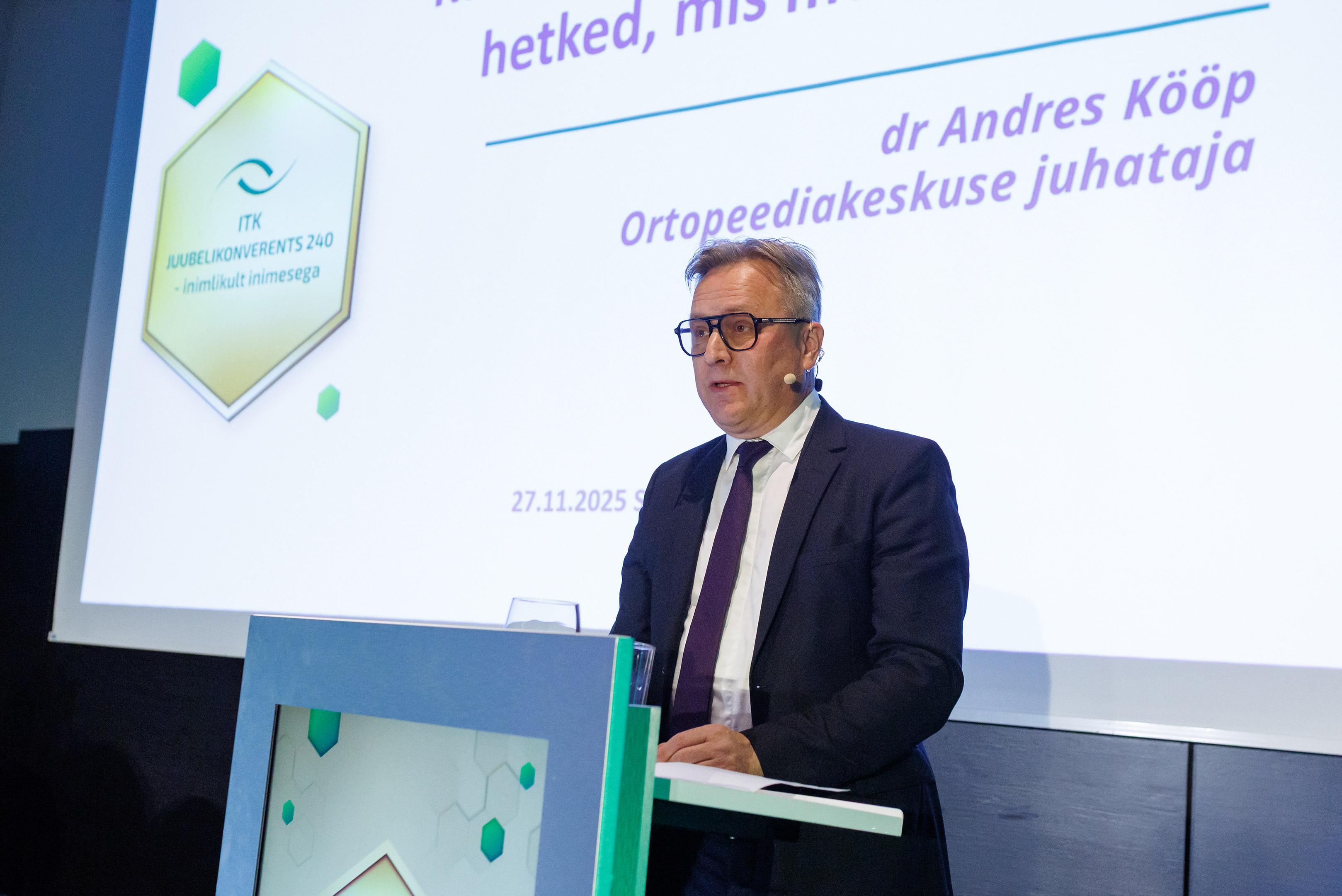
On 27 November, East Tallinn Central Hospital marked its 240th anniversary with a jubilee conference titled “Humanely with People”. The event reflected the hospital’s core values and focused on the principles of human-centred healthcare.
The presentations offered an overview of recent developments across several clinics, including rehabilitation, women’s health and ophthalmology.
The midday session addressed healthcare quality and systemic development. Speakers shared experiences with the digital implementation of NEWS2 (an internationally used early warning score that helps identify early signs of deterioration) and presented initial findings from the sepsis recognition audit. The session also examined the roles of teaching physicians and teaching nurses, as well as the development of nursing guidelines that help establish a consistent foundation for healthcare practice in Estonia.
The afternoon programme turned to ethical and human-centred topics. Alice Lill, Head of the ITK Internal Medicine Clinic, noted that Estonia’s ageing population is placing increasing pressure on healthcare. Older patients often live with multiple chronic conditions and therefore require careful and continuous management to reduce complications and the risks associated with hospital treatment. Lill emphasised that although digital tools provide new opportunities for monitoring chronic illnesses, healthcare providers must consider older adults’ digital skills and level of independence to ensure that technology does not increase their vulnerability.
Elen Vettus, Head of the ITK Oncology Centre, discussed integrative oncology, underscoring that evidence-based cancer treatment can be complemented by research-supported therapies that enhance patients’ quality of life throughout the care journey. Physical activity and mind–body practices such as mindfulness, yoga and music therapy can help ease treatment side effects, reduce anxiety and fatigue, and support better sleep and daily functioning. According to Vettus, an integrative approach strengthens patient-centred care and adherence to treatment and enables people to maintain a better quality of life even while living with cancer.
The programme also examined the mental wellbeing of healthcare workers. Maarja Hallik, Head of the ITK Anaesthesiology and Intensive Care Centre, spoke about the “second victim” concept, which refers to healthcare professionals who are psychologically affected after involvement in a severe patient-related incident. A recent study from the University of Tartu indicates that staff members who have experienced such situations may not always receive the support they need, even though emotionally demanding events require timely and structured assistance to protect both staff wellbeing and patient safety.
The conference also explored staff experiences in the context of ongoing discussions about the future Tallinn Joint Hospital.
The photo shows Dr Andres Kööp, Head of the ITK Orthopaedics Centre.